
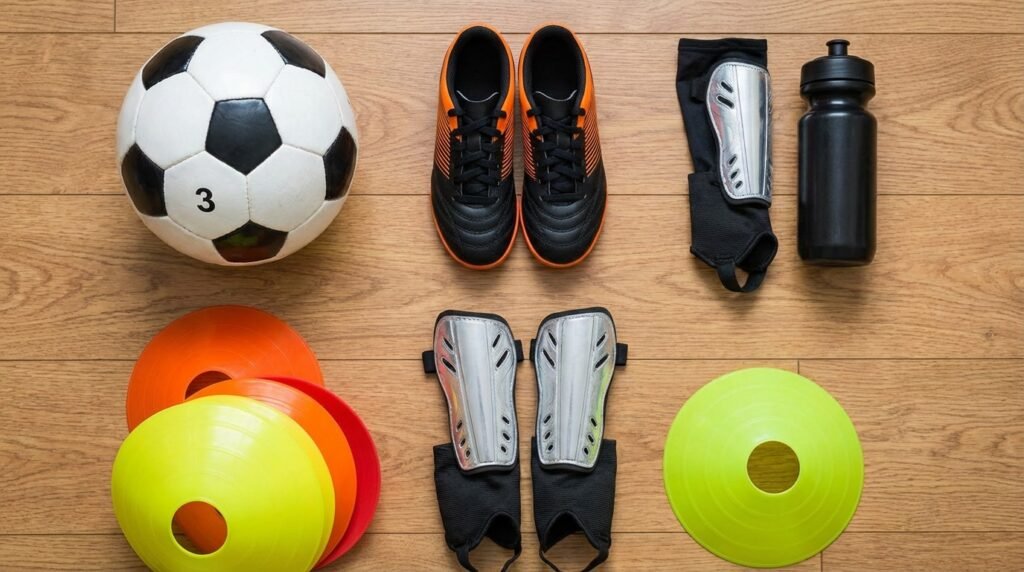
The right soccer gear and equipment for kids keeps them safe, comfortable, and excited to play. Well-fitted soccer equipment for children improves touch, balance, and confidence, and it also makes practices easier for coaches and parents. This guide walks you through what to buy and how to size it, from soccer ball sizes and cleats to shin guards and simple training tools. Use it as a checklist before you shop so your child arrives at practice ready to move, learn, and enjoy the game.
Why Choosing the Right Soccer Gear Matters for Your Child
The gear you choose does more than complete a uniform. It diretly affects kids’ soccer safety, comfort, and how quickly they pick up skills.
- Safety: Soccer can involve bumps, kicks, and slips. Proper shin guards protect the lower legs from impact, while well-fitted cleats provide grip that reduces falls and ankle twists.
- Comfort: If gear is too tight, too loose, or rubs in the wrong places, kids get distracted and frustrated. Comfortable youth soccer gear lets them focus on playing instead of adjusting socks or shoes.
- Skill development: When soccer equipment fits well, children can practice ball control, passing, and dribbling without fighting their gear. A ball that matches their age and size helps them build better technique and confidence.
The Essential Soccer Gear Every Child Needs
Every young player, from beginners to more experienced kids, needs a simple soccer gear checklist to get started.
- Uniform: A basic kit includes a breathable jersey, shorts, and long soccer socks. Look for lightweight, moisture-wicking fabrics so your child stays cool and comfortable.
- Soccer cleats: Cleats give traction, support, and stability. They help kids cut, turn, and sprint without slipping, especially on grass or turf.
- Shin guards: These protect the lower legs from kicks and collisions. Sizing should follow your child’s height, not just their age.
- Water bottle: Hydration is part of performance. A sturdy, easy-open bottle helps children drink regularly during training and games.
- Optional extra gear: Training balls, cones, and speed ladders are useful if your child enjoys kids’ soccer training at home. They are not required for beginners, but they support extra practice.
Understanding Soccer Ball Sizes and Selecting the Right One
Choosing the right soccer ball size is one of the simplest ways to support your child’s development.
For most soccer equipment for children, ball sizes follow this guide:
- Size 1: Skills ball for ages 3–5. Great for fun touches, juggling, and coordination.
- Size 3: Standard ball for ages 6–8. Ideal for young beginners and early teams.
- Size 4: For ages 8–12. Used in most youth leagues before full-size play.
- Size 5: Full-size ball for players 12+ and adults.
How to Choose the Right Ball for Your Child
Start by checking your league’s rules for ball size. For home practice, younger or newer players often do well with a slightly softer training ball that’s easier on their feet and easier to control. If your child plays indoor or futsal, ask whether a smaller, low-bounce ball is required, as this is common in indoor youth soccer.
Material and Build Considerations
The material and build of the ball affect touch and durability:
- PVC: More durable and budget-friendly. Good for frequent outdoor practice.
- PU (polyurethane): Softer feel and better touch, ideal for skill work.
- Build: Hand-stitched or hybrid balls usually last longer than cheaper machine-stitched balls.
Parent takeaway:
Always inflate the ball to the PSI printed near the valve. Over-inflated balls feel rock-hard and hurt feet, while under-inflated balls are harder to control and don’t travel correctly.
Picking the Right Soccer Cleats for Your Child
Soccer cleats are one of the most important pieces of youth soccer gear. They affect grip, comfort, and safety every time your child steps on the field.
A good pair of kids’ soccer cleats will:
- Provide traction during quick turns and sprints
- Support growing feet with a stable base
- Reduce the risk of slipping or rolling an ankle
Cleat types to know:
- Molded cleats (FG/MG): Best for most young players. These have fixed studs and work well on typical grass and many turf fields.
- Detachable studs: Used mostly by advanced or older players who play on very soft or changing fields. Not usually needed for beginners.
- Turf and indoor shoes (TF/IC): Turf shoes have many small rubber studs for artificial turf. Indoor shoes have flat, non-marking soles designed for gym floors or indoor courts.
Fit and sizing tips:
Cleats should feel snug but not painful. Your child should have a small amount of toe room (about a thumb’s width) without their foot sliding around inside the shoe. Always have them try cleats on with soccer socks, and ask them to jog, cut, and stop to test comfort before you buy.
How to Choose Shin Guards and Ensure Proper Fit
Shin guards are non-negotiable youth soccer protection. They absorb impact from tackles, stray kicks, and tight challenges.
Sizing Shin Guards by Height
Use height as a guide when choosing shin guard size:
- Small: Up to 5’2″ (about 157 cm)
- Medium: Up to 5’10″ (about 178 cm)
- Large: Up to 6’4″ (about 193 cm)
- Extra-large: Up to 6’10″ (about 208 cm)
The top of the shin guard should sit a couple of fingers below the knee, and the bottom should rest above the ankle bone without digging in.
Styles of Shin Guards
- Slip-in shin guards: Lightweight and worn under the sock. Older or more experienced kids often prefer these for freedom of movement.
- Strap-on with ankle protection: These include built-in ankle pads and elastic foot straps. They are a good choice for younger players who need extra stability.
When to replace shin guards:
Replace shin guards if they are cracked, flattened, or too short. If your child complains of discomfort or you notice more exposed shin, it’s time for the next size or a better model.
Extra Training Gear to Improve Your Child’s Skills
If your child loves the game and wants to improve in soccer, a few simple training tools can make home practice more fun and effective.
Training Balls
Special training balls can support skill work:
- Softer, lighter balls are kinder on feet and encourage a better first touch.
- Smaller skills balls help with juggling, coordination, and close control.
Cones and Speed Ladders
Cones and ladders are simple but powerful:
- They build agility, quick feet, and sharp changes of direction.
- You can set up short, fun home drills for dribbling, side steps, and sprint patterns.
Backyard Soccer Nets
A small net or foldable goal transforms a yard into a soccer training for kids space:
- Kids can practice shooting, passing into targets, and basic goalkeeping.
- Foldable goals are easy to move and store when not in use.
When to Buy Extra Gear
Think about investing in extra soccer training equipment when:
- Your child often asks to practice at home
- They move up a team level or start playing year-round
- Cheaper gear wears out quickly due to frequent use
You don’t need everything at once. Start with a good ball and a few cones, then add more as interest and commitment grow.
Age-Specific Considerations: Choosing Gear by Development Stage
Kids’ needs change as they grow. Matching age-appropriate soccer gear to their stage helps them stay safe and confident.
Younger Players (Ages 4–8)
At this stage, comfort and fun matter most.
- Focus: Comfort, safety, and enjoyment
- Ball: Size 1 for skills, Size 3 for play
- Cleats: Soft uppers, easy to put on and take off
- Shin guards: Strap-on models with ankle protection
- Kit: Lightweight jersey and cushioned socks
Choose gear that doesn’t feel heavy or stiff. If something bothers them, they’re less likely to enjoy the game.
Intermediate Players (Ages 9–12)
Players here are building real youth soccer development habits.
- Focus: Performance and skill growth
- Ball: Size 4
- Cleats: Molded firm-ground (FG) or multi-ground (MG); turf shoes for artificial fields
- Shin guards: Slip-ins or strap-ons that stay secure during play
- Extras: Cones, ladder, basic rebounder for home practice
Durability starts to matter more because they train harder and more often.
Advanced Players (Ages 13+)
Older or more advanced players may be training several times a week and playing competitive matches.
- Focus: High performance and durability
- Ball: Size 5
- Cleats: Surface-specific models (FG, SG, TF, IC), depending on fields
- Shin guards: Slim slip-ins with compression sleeves for a secure fit
- Extras: Quality goal, strong rebounder, compression layers
At this stage, investing in better gear often makes sense, as it will be used frequently and under more intense conditions.
Gender Considerations: Fit Comes First
When choosing soccer gear for kids, gender labels matter less than comfort and fit.
- Some girls and women prefer cleats with narrower heels and lower-volume uppers for a closer fit.
- Sports bras and soft, supportive base layers help older girls move confidently and comfortably.
- Shin guards are effectively unisex; focus on length, coverage, and calf comfort, not the label.
- Soft hair ties, headbands, or sport hijabs (where relevant) help keep vision clear and distraction low.
The main rule: if the gear feels good, stays in place, and doesn’t rub, it is likely a good choice.
Why Investing in Quality Gear Is Worth It
Cheap gear can work for a short time, but quality soccer equipment for children pays off in several ways.
- Long-term value: Higher-quality gear often survives multiple seasons instead of just a few weeks. This can cost less over time than replacing broken or worn-out items.
- Comfort and fit: Better materials and design usually mean fewer blisters, fewer complaints, and more focus on the game.
- Safety and durability: Stronger shin guards, well-built cleats, and sturdy balls stand up to real play and protect your child better.
You don’t need the most expensive brand in the store, but avoiding the very cheapest options often makes a noticeable difference.
Ready to Buy the Best Soccer Gear for Your Child?
You can find youth soccer gear at both online retailers and local sports shops. Stores that specialize in soccer usually offer more sizes, better staff knowledge, and clearer information on soccer ball sizes, cleats, and shin guards.
How to Compare Gear Options
When comparing gear, keep this simple checklist in mind:
- Fit first: Check cleat length and width, shin guard length, and how the uniform feels when your child moves.
- Build quality: Look at stitching, upper material on cleats, and panel joining on balls.
- League rules: Confirm ball size, allowed cleat types, and any safety requirements.
- Use vs. price: Daily players benefit more from higher-grade gear. Casual players can start with mid-range options.
Frequently Asked Questions About Kids’ Soccer Gear
Your child needs a ball, soccer cleats, shin guards, long socks, a jersey, shorts, and a water bottle. Most leagues also require proper shin guards and age-appropriate soccer ball sizes, so check their rules before buying.
Most 4–5 year olds use a Size 3 ball, ages 8–12 use Size 4, and players 12+ use Size 5. Always confirm with your league, but following ball size by age is a safe starting point.
Running shoes are fine for very casual play, but soccer cleats for kids are safer on grass or turf. Cleats provide better grip, which reduces slipping and helps with quick turns and stops.
Yes. Shin guards are required in most youth leagues and are one of the most important kids’ soccer safety items. They protect the lower legs from kicks and knocks during tackles and tight play.
Replace gear when it no longer fits, feels uncomfortable, or is visibly worn or cracked. Kids often outgrow cleats and shin guards in a season or two, even if they’re still in good condition.
For beginners, focus on basic soccer equipment for children: a correctly sized ball, comfortable cleats, properly fitted shin guards, and a simple uniform. Extras like cones or nets can come later once they enjoy the game.
Extra training gear is worth it if your child likes to practice at home or plays regularly. Cones, ladders, and a small net make it easier to do simple home drills that build coordination and confidence.
You don’t need top-end gear for most children. Aim for mid-range items that fit well and feel comfortable. Spend a bit more on cleats and shin guards, which directly affect comfort and safety.