

Starting your child’s first soccer season can feel exciting but also a little overwhelming. Many parents find themselves worrying about the right gear, keeping up with practice routines, managing game-day nerves, and understanding what to expect from organised soccer in Scarborough. To make things easier, we’ve put together a simple first soccer season checklist that covers everything you need. This youth soccer parent guide is designed to help you feel prepared, confident, and ready to support your child through their child’s first soccer season.
With 416 Soccer Club, parents can relax knowing their child’s first soccer season is fully supported with proper gear, age‑grouped training, and safe, structured programs that remove the usual stress. This youth soccer parent guide ensures game-day nerves, practice planning, and skill development are all handled, so families can focus on fun and growth.
Why the First Soccer Season Matters
The first soccer season plays a huge role in shaping your child’s confidence, enjoyment, and whether they develop a lasting love for the game. For many kids, their first experiences with practices, games, and teammates set the tone for the seasons ahead. Supporting your child who is new to soccer means helping them feel comfortable with gear, learning basic skills, and navigating game-day excitement without pressure. Both Ontario Soccer and Scarborough Soccer emphasize that fun, development, and age-appropriate experiences are more important than winning or results. Following these guidelines is essential for any parent looking to guide their child successfully soccer play, making this a practical youth soccer parent guide.
Focus on Fun Before Performance
For a child’s first soccer season, enjoyment should always come first. Emphasizing fun over competition helps kids build confidence, develop social skills, and stay motivated to keep playing. Supporting your child who is new to soccer means celebrating small successes like learning a new skill or making a teammate smile, rather than focusing on goals or wins. Both Ontario Soccer and Scarborough Soccer highlight that when children enjoy the game, performance naturally improves over time, making this approach a key part of any youth soccer parent guide.
Set Simple, Realistic Expectations
Parents can reduce stress by keeping expectations simple and age-appropriate. Expect your child to learn basic skills, try their best, and enjoy teamwork, rather than expecting flawless technique or constant wins. Clear, realistic goals help kids feel successful and supported. Supporting your child who is new to soccer with patience and encouragement fosters a positive experience and long-term interest, aligning perfectly with a youth soccer parent guide approach recommended by Ontwario Soccer and Scarborough Soccer.
What Does Your Child Need for First Soccer Season?
Your child needs proper soccer cleats or indoor shoes, shin guards, comfortable athletic clothing, a water bottle, a ball for home practice, and weather-appropriate layers to stay safe, confident. Knowing how to prepare for soccer season also means planning for weather-appropriate layers, keeping extra socks handy, and understanding basic rules and safety. Being prepared with these essentials ensures your child can participate confidently, stay safe, and most importantly, enjoy the game while developing skills and a love for soccer.
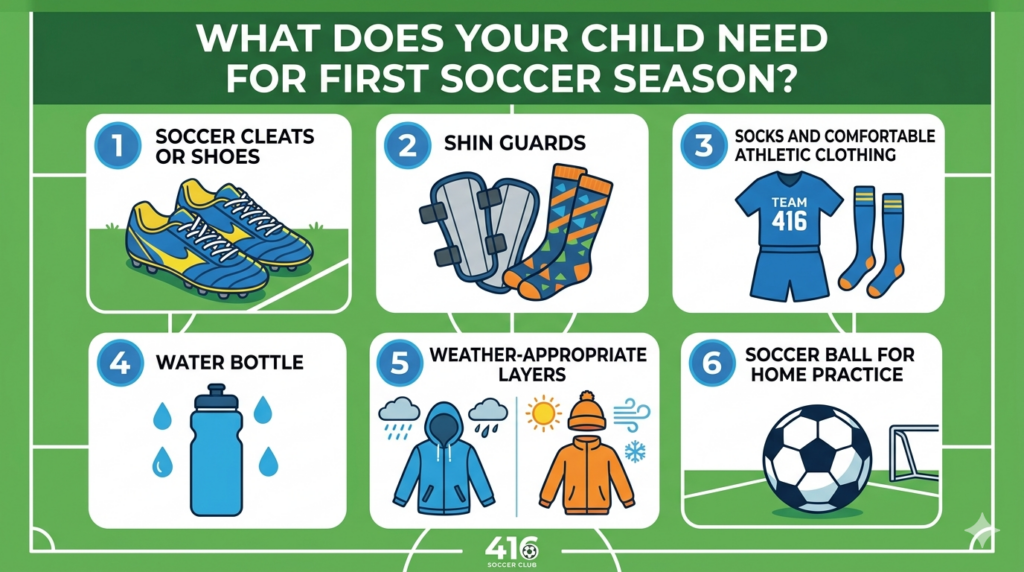
Soccer Cleats or Shoes
Soccer cleats are a must for outdoor play because they provide proper traction on grass or turf, helping prevent slips and injuries. The right cleats also support growing feet and improve balance and confidence during games. For indoor sessions, lightweight shoes are ideal, giving your child grip on gym floors without damaging surfaces. Choosing the correct footwear is one of the simplest ways to ensure your child enjoys their first soccer season safely and comfortably.
Shin Guards
Shin guards are essential for protecting young legs from accidental kicks, collisions, and falls, which are common in youth soccer. Make sure they fit snugly and are worn with socks covering them to stay in place during games and practices. Wearing the right shin guards not only prevents injuries but also gives your child confidence to play more freely and engage fully in drills and matches.
Socks and Comfortable Athletic Clothing
Long soccer socks are necessary to hold shin guards in place, while breathable athletic shorts or pants and a lightweight t-shirt or jersey allow for maximum movement and comfort. Avoid restrictive or heavy clothing, as it can hinder performance and make children feel uncomfortable. Comfortable clothing also helps kids focus on learning skills rather than being distracted by itchy or tight gear.
Water Bottle
Staying hydrated is critical for energy, focus, and overall safety, especially during long practices or games. A reusable water bottle ensures your child can drink whenever needed and reduces reliance on shared water stations. Teaching your child to carry and use their own water bottle also encourages independence and responsibility. Hydration helps prevent fatigue, cramping, and overheating, keeping your child performing at their best.
Weather-Appropriate Layers
Scarborough’s weather can change quickly, so having the right layers is important. Lightweight jackets for chilly days, breathable layers for warmth, and waterproof gear for rain help your child stay comfortable and focused. Being prepared for all conditions prevents distractions and discomfort during practice, ensuring kids can enjoy soccer no matter the weather. It also teaches them how to dress appropriately for outdoor activities.
Soccer Ball for Home Practice
Having a personal soccer ball allows your child to practice dribbling, passing, and shooting at home between organized sessions. This extra practice reinforces skills learned during training, builds confidence, and helps your child develop a stronger connection with the game. Practicing at home can also be fun for the whole family, creating positive experiences that motivate your child to keep improving.
What Size Soccer Ball Does YourChild Need?
The right soccer ball size is key for your kids skill development, control, and confidence. Use Size 3 for ages 4–7, Size 4 for ages 8–12, and Size 5 for ages 13 and up. Choosing the correct ball ensures your child can dribble, pass, and shoot effectively while staying safe and comfortable.
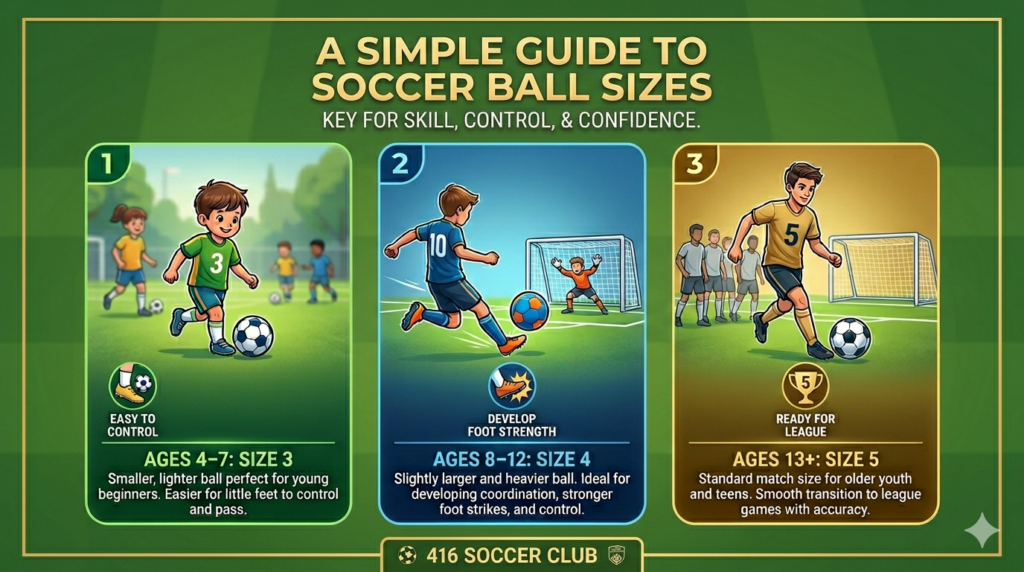
Selecting the proper soccer ball isn’t just about age it impacts your child’s learning and enjoyment. A ball that’s too big or heavy can make passing and shooting difficult, while a smaller ball may limit practice effectiveness as they grow. Size 3 is lightweight and perfect for beginners, allowing kids to master basic skills. Size 4 supports skill development for intermediate youth players, helping with control and coordination. Size 5 is the standard for older youth and teens, preparing them for competitive play and matches. Using the right size also reduces the risk of injuries and encourages consistent practice at home or on the field.
Recommended Soccer Ball Sizes by Age
- Ages 4–7: Size 3 – This smaller, lighter ball is perfect for young beginners. It’s easier for little feet to control, dribble, pass, and shoot without strain. Using Size 3 helps children build confidence while mastering basic skills and reduces the risk of injury from a ball that’s too heavy.
- Ages 8–12: Size 4 – Slightly larger and heavier than Size 3, Size 4 is ideal for developing coordination, control, and stronger foot strikes. At this age, children have better strength and skill, so Size 4 allows them to practice passing, shooting, and dribbling more effectively while preparing for competitive youth play.
- Ages 13+: Size 5 – The standard ball for older youth and adults, Size 5 is necessary for competitive play. It matches official match sizes, helping teenagers transition smoothly to league games. Using Size 5 develops proper technique, foot strength, and accuracy for passing, shooting, and controlling the ball under game conditions.
Are Shin Guards Required for Youth Soccer?
Yes, shin guards are required for youth soccer. They protect your child’s lower legs from kicks, collisions, and accidental contact during practices and games. Choosing the right size and fit ensures safety, comfort, and confidence on the field, making shin guards an essential part of any young player’s gear. Shin guards are foundational protective gear for all youth players. They prevent bruises, cuts, and more serious injuries that can occur during tackles or accidental kicks. Proper fit is important: guards should cover the shin fully, stay in place under socks, and not restrict movement. Comfortable, well-fitted shin guards let children focus on learning skills, building confidence, and enjoying soccer safely.
What Should Parents Bring to Soccer Practice?
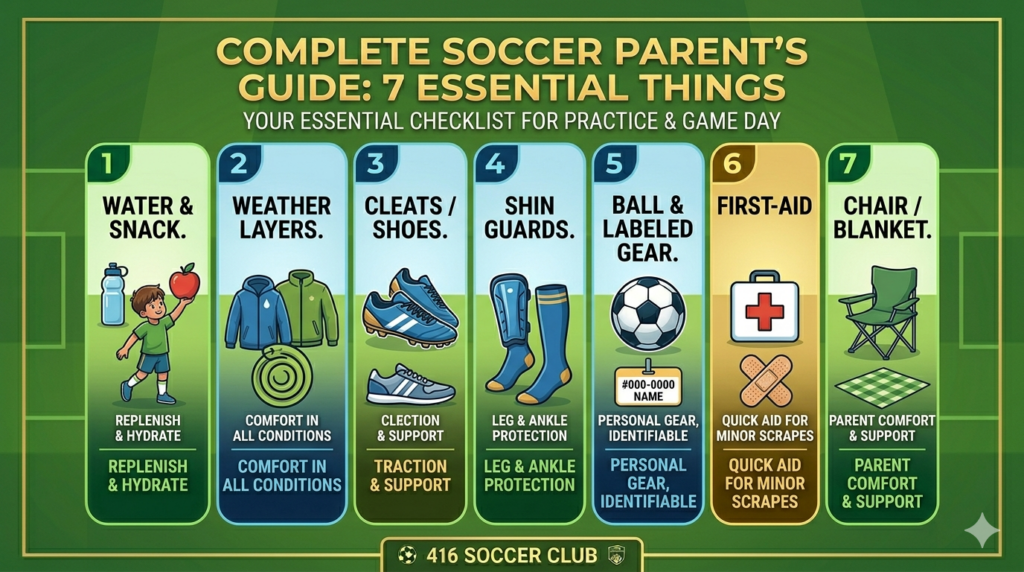
Parents should bring water and snacks, extra clothing for weather changes, proper footwear and shin guards, a ball and labelled gear, small first-aid items, and a chair or blanket for outdoor fields. Arriving early with a positive attitude ensures a smooth, stress-free experience. This forms a simple soccer season checklist for parents.
Water and Snack
Hydration is essential, especially during active practices. Bringing water ensures your child can stay hydrated and maintain energy, reducing fatigue and improving focus. A healthy snack, like fruit or granola bars, helps replenish energy during breaks, keeping children alert and ready for the next drill or game.
Extra Layer or Rain Jacket
Scarborough’s weather can change quickly, from sunny to cold or rainy. Extra layers or a rain jacket protect your child from getting chilled or wet, which could cause discomfort or distraction during practice. Staying comfortable allows them to focus on learning skills instead of feeling cold or wet.
Cleats / Shoes and Shin Guards
Correct footwear provides traction and support, reducing the risk of slips or injuries. Properly fitted shin guards protect legs from accidental kicks or collisions. These items are essential for safety and performance, giving children confidence to fully participate in drills and games.
Ball and Labelled Gear
Bringing your child’s soccer ball allows them to practice skills at home or during warm-ups. Labelled gear prevents lost or mixed-up items, especially in group settings where multiple children have similar equipment. This helps the practice run smoothly and avoids unnecessary stress.
Small First-Aid Basics
Minor scrapes, blisters, or bumps are common in soccer. Having band-aids, antiseptic wipes, or ice packs allows parents to quickly address small injuries, preventing discomfort and keeping the child in the game safely.
Chair or Blanket for Outdoor Fields
For parents watching outdoor practice, a foldable chair or blanket ensures comfort during longer sessions. Being physically comfortable allows parents to stay attentive and supportive without fatigue.
Positive Attitude and Enough Time to Arrive Early
Arriving early gives children time to settle, warm up, and get organized. A positive, encouraging attitude helps reduce nerves, builds confidence, and models good sportsmanship, making the experience enjoyable for both child and parent.
How to Prepare Your Child Before the Season Starts
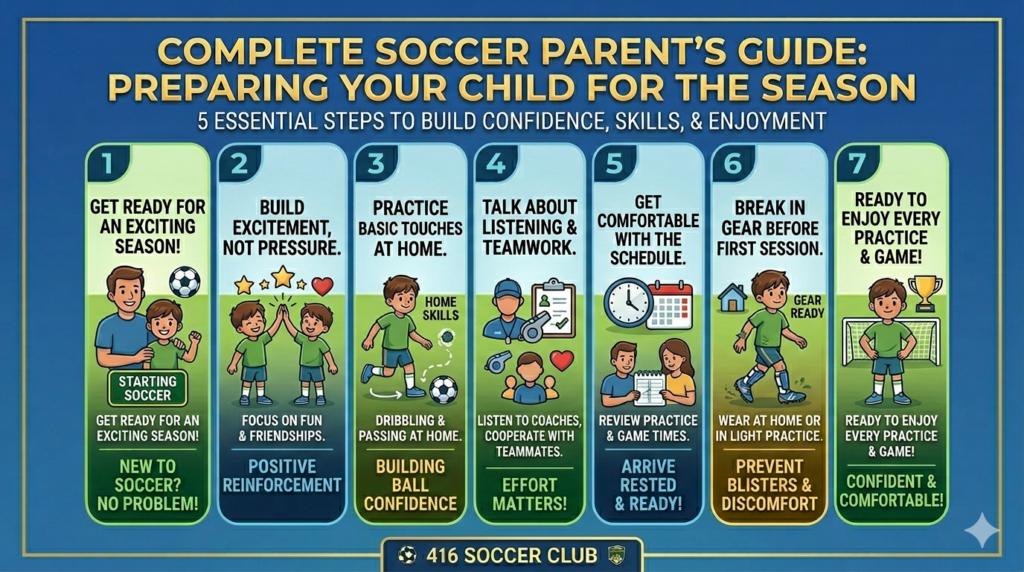
To prepare for the soccer season, focus on physical, emotional, and routine preparation. Build excitement, practice basic touches at home, discuss teamwork and effort, get comfortable with the schedule, and break in new gear. Supporting your child who is new to soccer with these steps ensures they enter the season confident, comfortable, and ready to enjoy every practice and game.
Build Excitement, Not Pressure
Encourage your child by talking about the fun aspects of soccer—making friends, learning new skills, and enjoying games. Avoid stressing about performance or results. Positive reinforcement helps them feel eager and confident instead of anxious.
Practice Basic Touches at Home
Simple drills like dribbling, passing against a wall, or gentle juggling improve coordination and ball familiarity. Practicing at home gives children confidence when they join team sessions and helps reinforce skills learned at practice.
Talk About Listening, Teamwork, and Trying Their Best
Explain the importance of listening to coaches, cooperating with teammates, and focusing on effort rather than outcomes. This sets expectations for behavior and mindset, ensuring your child is emotionally prepared for structured soccer environments.
Get Comfortable with the Schedule
Review practice and game times with your child so they know what to expect. Adjust bedtime, morning routines, and transportation plans to reduce stress and ensure your child arrives rested and ready to participate fully.
Break in Gear Before the First Session
New cleats, shin guards, or socks should be worn briefly at home or during light practice before the first session. Breaking in gear prevents discomfort, blisters, or distractions, allowing your child to focus on learning and having fun from day one.
How Can Parents Support Their Child at Soccer Games?
Parents can best support their child at soccer games by encouraging effort over results, keeping sideline behaviour positive, and letting coaches handle instruction. Avoid over-coaching, praise bravery and teamwork, and focus on enjoyment. Supporting your child who is new to soccer with patience and positive reinforcement builds confidence, motivation, and a lasting love for the game.
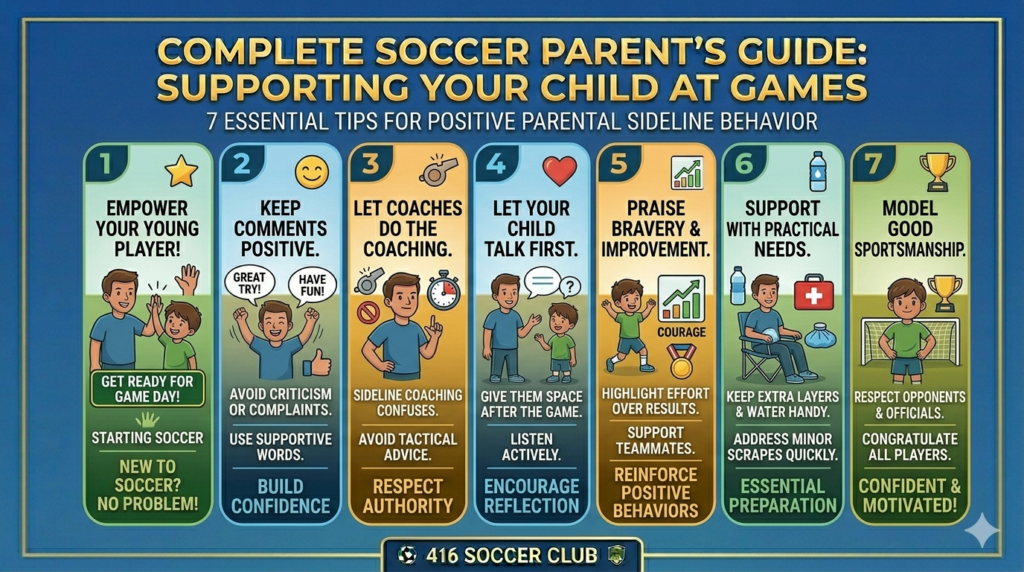
Cheer Effort, Not Just Results
Focus on your child’s effort, hustle, and participation rather than the score. Recognizing hard work and improvement helps kids feel proud and motivated, even if the team loses. Celebrating effort teaches them that dedication matters more than winning, which is essential in their early soccer experiences.
Keep Sideline Comments Simple and Positive
Use encouraging words like “Great try!” or “Nice teamwork!” Avoid criticism, complaints, or coaching from the sidelines. Positive comments help children stay confident and reduce anxiety, creating a supportive environment for learning and fun.
Don’t Coach from the Sidelines
Let coaches lead the instruction. Sideline coaching can confuse children and undermine the coach’s authority. Your role is to support, not correct, allowing kids to focus on learning skills and following guidance from their trained coach.
Let Your Child Talk First After the Game
Give your child space to share their thoughts and feelings about the game. Listen actively without immediately correcting or questioning. This encourages reflection, self-expression, and helps them feel heard and supported.
Praise Bravery, Teamwork, and Improvement
Highlight moments when your child tried something new, supported a teammate, or improved a skill. Praising bravery and effort builds confidence, teaches sportsmanship, and reinforces positive behaviours that will help them grow both on and off the field.
What Should Parents Expect From 416 Soccer Club in Scarborough?
416 soccerClub in Scarborough is designed to be safe, fun, accessible, and focused on development rather than competition. Programs follow Scarborough Soccer’s Standards guidance to ensure sessions are developmentally appropriate and built around player growth. Children learn skills, teamwork, and confidence while enjoying soccer in a supportive environment.
Age-Appropriate Learning
Activities are tailored to children’s ages and abilities. Younger players focus on basic coordination, dribbling, and passing, while older youth build more advanced skills. Age-appropriate learning keeps kids engaged, prevents frustration, and ensures they develop the right skills at the right time.
Development Over Winning
Grassroots programs prioritize skill development and personal growth over winning games. Coaches emphasize learning, improvement, and trying one’s best, helping children develop a love for soccer without undue pressure.
Qualified Coaching and Structured Sessions
Sessions are led by trained and certified coaches who follow structured lesson plans. This ensures children learn correct techniques, stay safe, and benefit from a consistent, organized program designed to develop all aspects of their game.
A Positive Environment for All Skill Levels
Grassroots soccer welcomes players of every ability. Programs focus on inclusion, encouragement, and fun. Children learn alongside peers with similar skills, fostering confidence, teamwork, and enjoyment while reducing anxiety about performance.
A Simple First Soccer Season Checklist for Parents
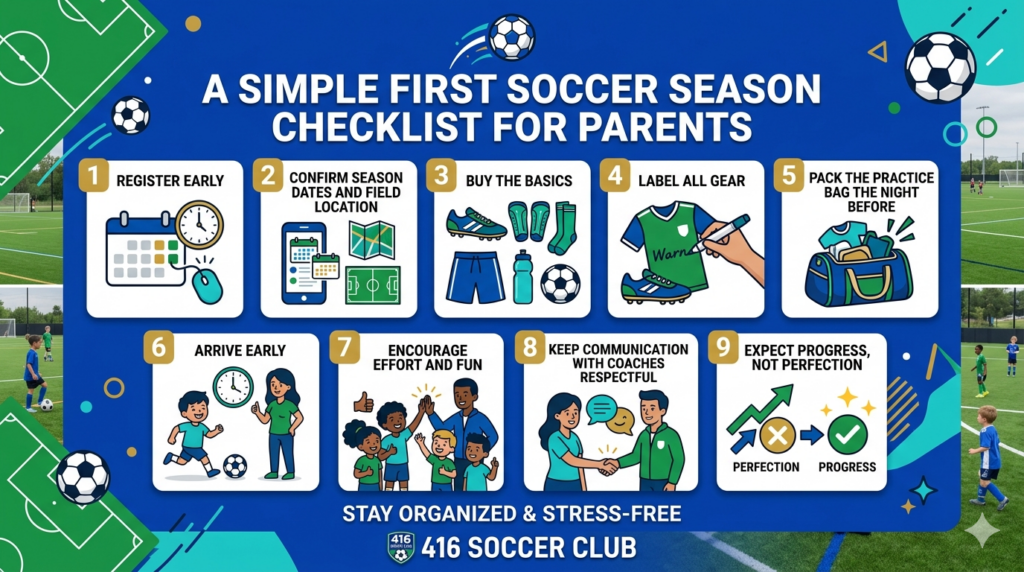
Here’s a practical first soccer season checklist to make your child’s experience smooth, fun, and safe. This also works as a soccer season checklist for parents to stay organized and stress-free:
Register Early
Signing up early ensures your child has a spot in the program, allows you to plan schedules in advance, and gives time to gather gear. Early registration often helps secure preferred practice times and age groups.
Confirm Season Dates and Field Location
Double-check practice and game schedules, including field locations. This avoids last-minute confusion and ensures your child arrives on time and prepared.
Buy the Basics
Purchase necessary equipment such as cleats or indoor shoes, shin guards, socks, comfortable athletic clothing, water bottle, and a ball for home practice. Being prepared from day one sets a positive tone.
Label All Gear
Label shoes, water bottles, balls, and clothing. This prevents lost items, confusion with teammates’ gear, and keeps your child’s belongings organized.
Pack the Practice Bag the Night Before
Organizing gear the night before saves morning stress. Include water, snacks, cleats, shin guards, extra clothing, and any first-aid basics. A ready bag ensures your child is prepared for any practice or weather changes.
Arrive Early
Arriving early allows time for warm-ups, getting organized, and settling any nerves. It helps children start practice focused and confident.
Encourage Effort and Fun
Cheer for your child’s effort, bravery, and teamwork rather than just goals or wins. Keeping the focus on enjoyment builds confidence and a lasting love for the game.
Keep Communication with Coaches Respectful
Maintain respectful, positive communication with coaches. Avoid sideline coaching or criticizing during games. This ensures your child gets consistent guidance and maintains a supportive learning environment.
Expect Progress, Not Perfection
Understand that mistakes are part of learning. Celebrate improvements, effort, and participation rather than perfection. This mindset helps your child stay motivated and confident throughout their first season.
Final Thoughts
The first soccer season doesn’t need to be perfect. What matters most is that your child feels supported, safe, and excited to return each week. Celebrating effort, growth, and enjoyment lays the foundation for a lifelong love of the game.
For parents in Scarborough and Toronto, 416 Soccer Club offers structured indoor and outdoor programs for children ages 5–15. With age-appropriate coaching, safe facilities, and a focus on fun and development, it’s an ideal place to help your child thrive in their first soccer season. Consider exploring their programs to give your child a positive, confident start to soccer.
Frequently Asked Questions About Parent’s Checklist for Kids First Soccer Season
Your child needs proper shoes, like cleats for outdoors or indoor shoes, shin guards, comfortable athletic clothing, a water bottle, a soccer ball for practice, and layers suitable for the weather. These basics keep them safe, confident, and ready to enjoy their first season.
Parents should bring water and a snack for their child, extra clothing or a rain jacket, cleats and shin guards, a soccer ball and labelled gear, small first-aid items, a chair or blanket for outdoor fields, and make sure to arrive early with a positive attitude.
For children ages 4 to 7, use Size 3. Ages 8 to 12 should use Size 4. For ages 13 and older, use Size 5. The correct size helps your child control, pass, and shoot the ball safely and confidently.
Yes, shin guards are required. They protect your child’s legs from kicks, collisions, and accidents. Choosing the right size and fit keeps them safe and comfortable during practices and games.
Parents can support their child by encouraging effort, teamwork, and bravery rather than focusing on winning. Keep sideline comments positive, avoid coaching from the sidelines, let your child talk first after the game, and praise improvement and participation. This approach builds confidence and enjoyment.
Grassroots soccer in Scarborough is safe, fun, and accessible. Programs focus on skill development, teamwork, and player growth rather than winning. Age-appropriate lessons, qualified coaches, and a positive environment help children of all skill levels enjoy learning soccer.