
Children handle summer heat very differently from adults. They produce more heat per kilogram of body weight, sweat less efficiently, and need 8 to 10 days to acclimate, nearly twice as long. This is why children can feel fine at the start and show heat exhaustion signs before a session ends.
Every stage of heat illness is preventable. Heat cramps caught early stop exhaustion from developing. Hydration, 5 ounces every 20 minutes for smaller players and 9 for older ones, stops cramps from starting. SPF 30 applied 20 minutes before leaving home covers Ontario’s summer UV index of 8 to 9. When the humidex reaches 40, the way a session runs needs to change. This guide covers all of it.
Why Kids Handle Summer Heat Differently
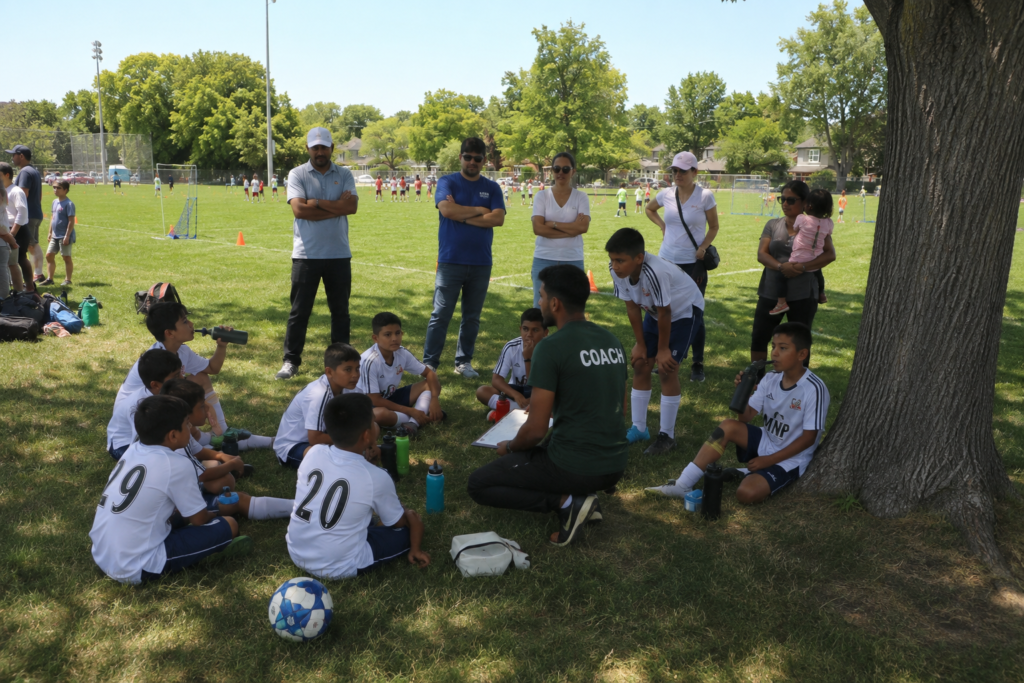
Children need 8 to 10 days of gradual outdoor exposure, at 45 to 60 minutes per day, before their bodies are ready to handle intense summer exercise. Adults adjust within 4 to 6 days. This gap matters most at the start of the outdoor season, when a child who has stayed active through winter arrives feeling fit but with heat management their body has not yet built.
Children also generate more heat per kilogram of body weight than adults during exercise and have less efficient sweat response. The body’s first option when sweating is limited is to radiate heat through the skin. That mechanism works until the air temperature is close to body temperature. On a day with a humidex of 38 to 42, which Ontario sees regularly through July and August, skin-to-air heat radiation stops working. When that happens, core temperature rises faster than most parents watching from the sideline would expect.
Recognizing Heat Illness Before It Gets Serious
Heat cramps
Muscle cramps during or shortly after a session, usually the legs or abdomen. The child is uncomfortable but fully alert with no other symptoms. Heat cramps are the body’s signal that fluid and electrolyte loss has outpaced intake.
Move the child out of direct sun, give them water, and rest them. Cramps resolve within 20 to 30 minutes when the child rehydrates properly. If symptoms do not improve or others begin appearing, the situation has moved past cramps.
Heat exhaustion
The signs are specific: heavy sweating alongside pale or clammy skin, headache, nausea, dizziness, and a weak or fast pulse. A child may stop running suddenly, sit down mid-field without explanation, or carry the blank expression parents describe as not quite there. This is different from normal post-session tiredness, which passes quickly with rest and water.
Remove the child from the field immediately. Move them to shade. Loosen or remove extra layers. Apply cool water to the wrists, back of the neck, and forehead. Give small sips of cool water. Most children improve visibly within 15 minutes. If they do not, or any symptom worsens, they need medical attention.
A child whose heat exhaustion is caught and addressed will not progress further. One whose signs are missed or dismissed can reach heat stroke, a medical emergency involving a body temperature above 40°C, confusion, and loss of coordination. The progression only happens when the earlier stages are ignored.
Hydration
Before the session
Hydration starts the morning of a session. A child who arrives at the field already behind on fluids begins every drinking break in a deficit. Normal water intake throughout the day before a session prevents this.
During the session
Thirst is a lagging signal in children during exercise. By the time a child asks for water during a July session, fluid loss has already exceeded what they have taken in.
Children weighing 90 pounds or under should drink 5 ounces of water every 20 minutes during outdoor summer activity. Children above 90 pounds should drink 9 ounces every 20 minutes. For a one-hour session, that is three planned drinking breaks.
What not to bring
Fruit juice slows fluid absorption due to its sugar content and frequently causes stomach discomfort during exercise.
Sports drinks are formulated for endurance athletes in sustained high-intensity efforts. For sessions under 90 minutes, water is the right choice. For sessions running longer than 90 minutes in significant heat, a small amount of diluted sports drink helps replace electrolytes.
Energy drinks should not be given to children before or during physical activity. Many contain caffeine, which increases fluid loss. High carbohydrate concentrations slow how quickly fluid leaves the stomach.
Carbonated drinks cause stomach fullness that reduces how much a child will voluntarily drink during movement.
After the session
Rehydration should continue for at least an hour after the session ends. The fatigue and headache some children develop in the early evening often traces directly to what happened on the field.
Through food
Watermelon, cucumber slices, and orange segments carry both water and electrolytes. They work well as a post-session supplement alongside continued fluid intake, particularly for younger players who resist drinking more water.
Sun Protection
Ontario’s UV index reaches 8 to 9 through summer, rated very high by Environment Canada. UV intensity peaks between 11am and 4pm from April through September. A child on an open grass field during that window, multiple times per week across a four-month season, is receiving sustained UV exposure with no shade buffer.
Apply broad-spectrum sunscreen rated SPF 30 or higher 20 to 30 minutes before going outside. Sunscreen requires time to absorb before it is fully active. Applying it on the way to the field is not the same as applying it 20 minutes before exposure begins. Reapply every two hours, and after sessions with significant sweating.
Clothing affects heat load. Light-coloured athletic clothing reflects sunlight. A dark jersey on a 33°C afternoon absorbs solar heat and raises body temperature noticeably over the course of a session. Where children have flexibility over training clothing, lighter colours make a practical difference.
Lips and ears are consistently missed. Both burn quickly on open fields. A lip balm with SPF and a hat worn during breaks and warm-up periods covers the time a child is not actively playing.
What to Bring to the Sideline
Water, more than one bottle. For a one-hour outdoor summer session, at least one litre per child. More on heat warning days.
An instant cold pack or small ice pack. Available at any pharmacy. Apply to the wrists and back of the neck when a child shows early overheating signs. Cooling the neck is particularly effective because large blood vessels run close to the surface there, and dropping their temperature lowers the temperature of blood reaching the brain.
A small wet cloth. Applied to the back of the neck, it provides faster surface cooling than pouring water over the head, which dissipates quickly in open air.
Extra sunscreen. The morning application covers the first 90 to 120 minutes. Reapplication at the session break handles the rest of the exposure window.
Hydration snacks. Orange slices, watermelon, or cucumber. Useful for sessions running long in heat and more accepted by younger players than a third water bottle.
Heat Warnings and Lightning: What They Mean for Sessions
Environment Canada heat warnings
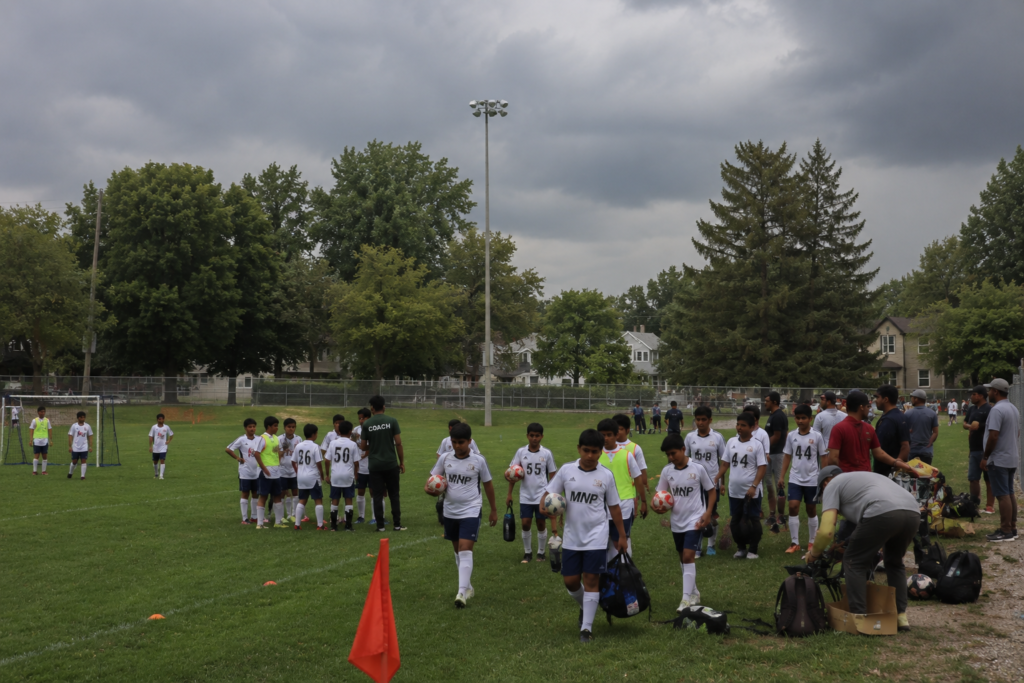
A heat warning is issued in Ontario when two or more consecutive days are forecast to hit 31°C or higher during the day with overnight lows above 20°C, or when humidex values are expected to reach 40 or above.
When a heat warning is active, sessions should shift to early morning or after 5pm to avoid peak heat and UV exposure. Hydration breaks should run more frequently. The early-season sessions are particularly high-risk because players have not yet acclimated, so extra attention to heat cramp and exhaustion signs applies especially in the first two weeks of the outdoor season.
Lightning
If thunder is heard, outdoor activity stops. The 30-30 rule applies: wait 30 minutes from the last heard thunder before resuming. Do not rely on seeing lightning. Thunder confirms lightning is within striking range regardless of visibility.
Players and parents move to a substantial building or hard-topped vehicle. Open tents and metal awnings are not safe shelter.
416 Soccer Club and Summer Safety
Coaches at 416 Soccer Club are first aid certified. Sessions include scheduled hydration breaks built into the structure rather than left to individual players. Age-group placement means younger children are not completing the same session duration or intensity as older players.
Parents with relevant health information about their child, including asthma, previous heat illness, or any condition affecting outdoor activity, should share it with coaching staff before the season starts. It changes how the team watches out for that player during sessions.
Questions Parents Ask
How do I tell heat exhaustion from normal tiredness after a hard session?
Tiredness passes within five to ten minutes of sitting down and drinking. Heat exhaustion does not. The child stays pale or clammy, feels nauseous, and does not recover after ten minutes in the shade. The clearest signal is that rest and water alone are not working. At that point, apply cooling measures to the wrists and neck and give small sips of water.
My child refuses to drink at breaks. How do I handle this?
Make it a non-negotiable team routine, not a personal instruction. A child told that everyone on the team drinks at the break accepts it more readily than one who feels singled out. If the resistance continues, pre-chill the water bottle. Cold water is more palatable than warm during exercise and children drink more of it without being asked.
Can my child drink sports drinks instead of water?
Water is the right choice for sessions under 90 minutes. After 90 minutes in significant heat, a small amount of diluted sports drink helps with electrolyte replacement. Undiluted sports drinks have more sugar than most children need in a recreational session and can cause stomach discomfort during play.
What should I bring on a heat warning day?
The full sideline kit listed above, plus at least 1.5 litres of water. Apply sunscreen the full 20 to 30 minutes before the session starts, not on arrival. If the session falls during peak heat hours, 11am to 4pm, it is worth raising with the coach before it begins.
How do I check conditions before a session?
Environment Canada’s weather app and website show the humidex forecast, UV index, and any active warnings. A humidex forecast above 38 warrants extra attention, particularly for younger players and for any child in the first two weeks of the outdoor season who has not yet acclimated to summer temperatures.
My child sweats heavily during sessions. Is that something to watch?
Heavy sweating is the body cooling itself correctly. A child who sweats a lot is losing more fluid than one who sweats lightly and needs to replace more. The sign to watch for is not heavy sweating but the opposite: a child who stops sweating during intense activity in heat, becomes flushed rather than pale, or seems confused. Those signs indicate the body’s cooling system is no longer keeping up.